
Acinetobacter baumannii is a gram-negative member of the ESKAPE group of pathogens and is recognized for causing severe hospital-acquired infections that are increasingly difficult to treat. Its carbapenem resistance is primarily driven by the production of β-lactamase enzymes, particularly the metallo-β-lactamase IMP-1 and the class D OXA-24 enzyme, which hydrolyze carbapenem antibiotics, rendering them ineffective. In this study, phytochemicals from ten Philippine-approved medicinal plants were explored as potential inhibitors of these key resistance enzymes. A total of 1,532 compounds were initially screened in ADMETlab 3.0, and twenty-three molecules met both the QED (quantitative estimate of drug-likeness) and ADMET (absorption, distribution, metabolism, excretion, toxicity) criteria. These selected compounds were then subjected to molecular docking using AutoDock 4, and several exhibited stronger binding affinities than the control drug. Among these, Kuguacin P, Negundol 1b, Negundoin E, Negundoin A, and Balsamiferine D emerged as the most promising candidates for further development of novel β-lactamase inhibitors.
Introduction
Acinetobacter baumannii is a gram-negative opportunistic pathogen and one of the ESKAPE (Enterococcus faecium, Staphylococcus aureus, Klebsiella pneumoniae, Acinetobacter baumannii, Pseudomonas aeruginosa, and Enterobacter cloaca) organisms responsible for severe nosocomial infections, including ventilator-associated pneumonia (Pendleton et al., 2013; Lee et al., 2023). The World Health Organization designates A. baumannii a critical-priority pathogen due to its rapid acquisition of multidrug resistance (WHO, 2017; WHO, 2023). Central to this resistance is the production of carbapenemase enzymes, particularly metallo-β-lactamases (MBLs) and OXA-type class D β-lactamases, which are not inhibited by existing β-lactamase inhibitors, leaving few effective treatment options (Evans & Amyes, 2014; Bush & Bradford, 2016).
Among these enzymes, the IMP-type MBLs are encoded by the blaIMP gene and disseminated across gram-negative bacteria via integrons, enabling widespread resistance (Pongchaikul & Mongkolsuk, 2022). IMP enzymes hydrolyze β-lactams through zinc-dependent catalysis at their active site (Bebrone, 2007). Variants such as IMP-1, first reported in Pseudomonas aeruginosa (Watanabe et al., 1991), and subsequent forms display structural loop differences that influence substrate binding and catalytic efficiency (Walsh et al., 2005). Their broad distribution across A. baumannii, K. pneumoniae, and other pathogens underscores their clinical significance.
Similarly, OXA-24 β-lactamase, also known as OXA-40, represents a plasmid-encoded carbapenemase initially confined to A. baumannii but now found in other species (Bou & Martínez-Beltrán, 2000). Its active site is characterized by a hydrophobic barrier formed by Tyr112 and Met223, creating a tunnel-like entry for substrates (Santillana et al., 2007). A conserved STFK tetrad within the active site mediates nucleophilic attack on β-lactams, facilitating carbapenem hydrolysis (Rice et al., 2012). The structural adaptability of OXA enzymes has contributed to their success in conferring high-level resistance (Poirel et al., 2010; Mubayrik et al., 2022).
In the Philippines, A. baumannii isolates frequently carry IMP and OXA-24-like genes, with carbapenem resistance rates exceeding 50% (Chilam et al., 2021). To address this, plant-derived natural products offer a promising alternative. The ten Department of Health (DOH)-approved medicinal plants (Vitex negundo, Blumea balsamifera L., Momordica charantia L., Allium sativum L., Psidium guajava, Carmona retusa, Mentha cordifolia, Quisqualis indica, Senna alata, and Peperomia pellucida, known for antimicrobial activity, provide a rational starting point (Dantes et al., 2021; PITAHC, nd). Here, in silico ADMET screening and molecular docking were employed to identify phytochemicals with inhibitory potential against IMP-1 and OXA-24, aiming to highlight novel candidates for combating multidrug-resistant A. baumannii.
Materials and Methods
The workflow of this study was adapted from Ahmed et al. (2023) and Etminani et al. (2023), with modifications suited to the available protein structures and software tools. The procedure was organized into five stages: (1) preparation of phytochemical ligands, (2) protein collection and refinement, (3) QED and ADMET screening, and (4) molecular docking.
Preparation of Phytochemical Ligands
Phytochemicals from the ten DOH-PITAHC medicinal plants (PITAHC, nd) were used as candidate ligands, yielding 1,532 compounds (Castro & Billones, 2024). Ligand SMILES and SDF files were obtained from PubChem; for unavailable compounds, structures were drawn using the RCSB PDB Chemical Sketch Tool. Structures were converted via OpenBabel v3.1.1 and geometry-optimized in Avogadro v1.2.0 using the MMFF94 force field (Steepest Gradient, convergence 10⁻⁷, 1000 steps). Optimized ligands were saved in Mol2 format.
Protein Collection and Refinement
The OXA-24 β-lactamase (PDB ID: 3G4P) was retrieved from RCSB PDB, while IMP-1 was modeled in SWISS-MODEL using UniProt Q6ZXZ6. Both structures were refined in ChimeraX v1.9 to remove water and heteroatoms, then processed in AutoDock Tools v1.5.7 by adding polar hydrogens, Kollman charges, and AD4 atom types. Final files were saved in PDBQT format.
QED and ADMET Screening
Ligands were screened in ADMETlab 3.0 for drug-likeness (QED ≥ 0.49) and pharmacokinetic parameters (absorption, distribution, metabolism, excretion, toxicity). Criteria included HIA, oral bioavailability, BBB penetration, hERG blockade, AMES toxicity, and hepatotoxicity. Only compounds meeting both QED and ADMET thresholds advanced to docking.
Molecular Docking
Docking was performed using AutoDock4 v4.2.6. Blind docking with sulbactam validated active sites in both targets (IMP-1: grid 100 × 100 × 100 Å, spacing 0.6 Å, center -11.002, 0.233, -20.063; OXA-24: grid 120 × 120 × 120 Å, spacing 0.6 Å, center 95.339, 27.065, 34.96). Subsequent site-directed docking was conducted for 23 screened ligands plus sulbactam as a control. Grid boxes encompassed the active sites (IMP-1: 70 × 70 × 70 Å, center -21.815, -1.523, -23.397; OXA-24: 70 × 70 × 70 Å, center 104.249, 27.118, 27.163). The Lamarckian genetic algorithm (10 runs, medium evaluation setting) was applied, and the lowest binding energy conformations were visualized in AutoDock Tools and BIOVIA Discovery Studio v25.1.0.24284.
Results and Discussion
QED and ADMET Screening of Phytochemical Ligands
The present study commenced with an extensive in silico screening of 1,532 phytochemicals derived from Philippine-approved medicinal plants, serving as the initial ligand pool (PITAHC, n.d.). These natural products, traditionally employed for a wide range of ailments, are an underexplored source of potential anti-bacterial compounds. Their structural diversity, spanning alkaloids, flavonoids, terpenoids, coumarins, and phenolic compounds, provided a robust foundation for identifying inhibitors against two clinically important β-lactamases in Acinetobacter baumannii: the IMP-1 metallo-β-lactamase (class B) and OXA-24 β-lactamase (class D).
Drug-likeness was assessed using the QED index, with a cutoff of ≥ 0.50, consistent with established thresholds for drug-like molecules (Bickerton et al., 2012). Many rejected ligands were excluded because they failed basic physicochemical constraints, such as excessive molecular weight, poor solubility, or unfavorable polarity. The QED-passing compounds underwent further evaluation for Absorption, Distribution, Metabolism, Excretion, and Toxicity (ADMET) properties using ADMETlab 3.0. Parameters included human intestinal absorption (HIA), oral bioavailability, plasma protein binding (PPB), blood–brain barrier penetration, and cardiotoxicity (hERG inhibition). In addition, hepatotoxicity and genotoxicity were considered, as these remain common liabilities in drug development.
Twenty-three (23) compounds passed the full panel of ADMET and QED criteria. These included flavonoid derivatives (e.g., negundoin analogues), terpenoid lactones (e.g., kuguacin P), and alkaloid scaffolds (e.g., balsamiferine D). Importantly, these 23 compounds displayed favorable oral bioavailability and low predicted toxicity (Table 1), supporting their candidacy for downstream docking studies.
Table 1. Quantitative Estimate of Druglikeness (QED) and Predicted ADMET Profiles of Top Hits
|
Compound |
HIA (%) |
BBB Penetration |
Oral Bioavailability |
hERG Risk |
Hepatotoxicity |
QED |
|
|
Kuguacin P |
High |
Low |
Moderate |
None |
None |
0.62 |
|
|
Negundol 1b |
High |
Negligible |
High |
None |
None |
0.69 |
|
|
Negundoin A |
High |
Low |
High |
None |
Low |
0.53 |
|
|
Negundoin E |
Moderate |
Low |
High |
Low |
None |
0.70 |
|
|
Balsamiferine D |
High |
Low |
Moderate |
None |
None |
0.61 |
|
Validation of Docking Protocol
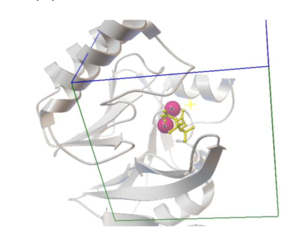
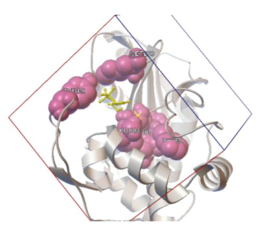
To ensure the reliability of docking simulations, blind docking was performed using the control drug sulbactam—a known β-lactamase inhibitor (Penwell, 2015). The docking reproduced experimentally reported active sites in both IMP-1 and OXA-24 (Figure 1), confirming the robustness of the grid box parameters and search algorithm (Lamarckian Genetic Algorithm, AutoDock4). For IMP-1, sulbactam docked within the zinc-coordinated catalytic groove, interacting with key residues (His116, His118, His196, Asp120) that stabilize the two zinc ions essential for hydrolysis (Pongchaikul & Mongkolsuk, 2022). For OXA-24, sulbactam localized within the STFK tetrad-centered active site, forming hydrogen bonds with Ser81 and stacking interactions with Tyr112 and Met223 side chains, consistent with crystallographic data (Santillana et al., 2007).
|
|
|
a) |
|
|
|
b) |
|
Figure 1. Docking pose of sulbactam from blind docking with a) IMP-1 metallo-β-lactamase and b) OXA-24 β-lactamase, showing alignment within the predefined grid box corresponding to literature-identified active sites. |
Molecular Docking of Phytochemicals
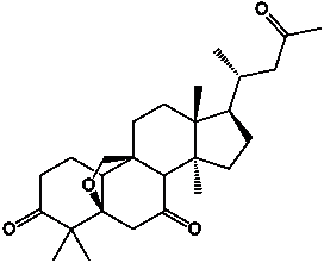
The 23 screened ligands were docked into the validated binding pockets of IMP-1 and OXA-24. Average binding energies reached as high (i.e., most negative) as –10.9 kcal/mol, with several ligands outperforming sulbactam (–6.7 kcal/mol). The top hits (Figure 2) included Kuguacin P, Negundol 1b, Negundoin A, Negundoin E, and Balsamiferine D, listed in decreasing order of average binding energy against the two targets (Table 2).
 |
|
Kuguacin P |
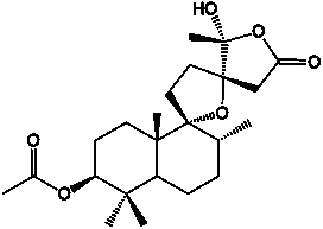 |
|
Negundol 1b |
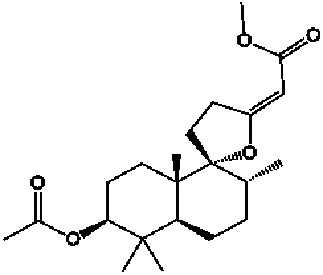 |
|
Negundoin A |
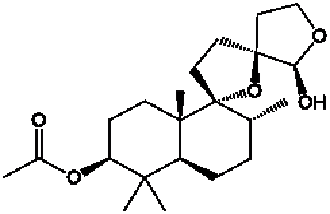 |
|
Negundoin E |
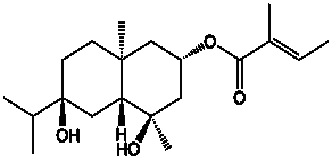 |
|
Balsamiferine D |
|
Figure 2. Chemical structures of the top five hits from molecular docking studies. |
Table 2. Molecular Docking Results of Top Five Compounds vs. Control Drug
|
Compound |
Plant Source |
Docking Score (kcal/mol) with IMP-1 |
Docking Score (kcal/mol) with OXA-24 |
Average Docking Score (kcal/mol) |
|
Kuguacin P |
Momordica charantia |
–11.4 |
–10.3 |
–10.9 |
|
Negundol 1b |
Vitex negundo |
–7.0 |
–8.0 |
–7.5 |
|
Negundoin A |
Vitex negundo |
–7.2 |
–7.6 |
–7.4 |
|
Negundoin E |
Vitex negundo |
–7.0 |
–7.7 |
–7.4 |
|
Balsamiferine D |
Blumea balsamifera |
–7.7 |
–6.9 |
–7.3 |
|
Sulbactam* |
synthetic |
–7.2 |
–6.1 |
–6.7 |
* Control
In silico analysis of several IMP-type metallo-β-lactamases (MBLs) revealed that the conserved sequence in the active site consists of His95, Phe96, His97, Asp99, Ser100, His157, Cys176, and His215. These enzymes contain two zinc (II) ions bound to the active site (Palacios et al., 2020; Chidambaranathan & Culathur, 2022; Pongchaikul et al., 2022; Macrì et al., 2023; Fiodorova, 2024), which were included in the binding site set for molecular docking analysis with IMP-1. The docking results showed that the active site residues interacted with the top 5 docked ligands, which were identified based on binding energies. Notably, His157 and His215 were consistently involved in interactions across all top hits. Although their direct role in IMP-1 resistance remains unclear, both are coordinated with one of the zinc atoms in the active site (Shakibaie et al., 2017; Chidambaranathan & Culathur, 2022; Pavithra et al., 2023).
Other active site residues, including His95, Phe96, His97, and Asp99, also demonstrated interactions with the ligands. Some ligands exhibited a higher number of interacting residues compared to the control drug, suggesting stronger binding affinity and a potentially greater inhibitory effect against IMP-1. These findings underscore the importance of further investigation into the functional significance of conserved residues and their role in ligand binding and enzyme inhibition.
The binding site for molecular docking with OXA-24 was defined to include the STFK tetrad and the tunnel-like entrance formed by Tyr112 and Met223. The conserved Ser residue within the STFK tetrad is crucial for catalytic activity, and ligand interaction with this residue may indicate probable inhibition of OXA-24 (Palacios et al., 2020). Docking results showed that all top 5 phytochemical ligands interacted with Ser81, while also engaging Tyr112 and Met223, which help orient inhibitors toward the active center. Previous in silico studies demonstrated that occupying this tunnel-like entrance, as in the case of QPX7728, contributes to vigorous inhibitory activity (Lence et al., 2021). Additionally, multiple residues interacted with the ligands, suggesting stronger binding affinity and inhibitory potential compared to the control drug.
Kuguacin P, a cucurbitane triterpenoid, ranked first for both IMP-1 and OXA-24 and has been reported to show weak anti-HIV-1 activity in vitro (Chen et al., 2009; Pavithra et al., 2023). Negundoin A, negundoin E, and negundol 1b are derived from Vitex negundo(lagundi), a plant with documented antimicrobial activity, including bactericidal effects of its ethyl acetate leaf extract against multidrug-resistant Klebsiella pneumoniae (Palaninathan et al., 2022). Meanwhile, balsamiferine D is a sesquiterpene derived from Blumea balsamifera (sambong), a plant renowned for its anti-bacterial properties against both Gram-positive and Gram-negative pathogens (Ismail et al., 2022). Balsamiferine compounds have also been shown to inhibit LPS-induced nitric oxide production in microglial BV-2 cells (Xu et al., 2012). These findings support the potential of the identified phytochemicals as lead compounds for the development of further inhibitors.
The discovery that natural phytochemicals can inhibit both class B (IMP-1) and class D (OXA-24) β-lactamases holds strong clinical promise against carbapenem-resistant A. baumannii. Compounds such as Kuguacin P exhibit favorable ADMET properties—high intestinal absorption, low plasma protein binding, and non-hepatotoxic predictions—supporting their potential as druggable adjuvant inhibitors, akin to clavulanic acid in combination with amoxicillin. Unlike conventional synthetic scaffolds, these phytochemicals derive from traditional medicinal plants, offering ethnopharmacological validation and a novel chemical space. This study is the first to highlight Kuguacin P, negundoin derivatives, and Balsamiferine D as dual inhibitors of IMP-1 and OXA-24, expanding the landscape of plant-derived β-lactamase inhibitors beyond prior flavonoid-based reports.
Conclusion
This study systematically identified and evaluated phytochemicals from the Philippines’ 10 Halamang Gamot (Medicinal Plants) as potential inhibitors of two critical β-lactamases in A. baumannii. Through QED and ADMET filtering, molecular docking, and interaction analyses, five phytochemicals emerged as promising candidates, with Kuguacin P consistently demonstrating the strongest dual inhibitory potential against IMP-1 and OXA-24. These findings underscore the untapped potential of Philippine medicinal plants in antimicrobial drug discovery, offering a compelling rationale for experimental validation and further optimization.
Acknowledgments: None
Conflict of interest: None
Financial support: The authors gratefully acknowledge the financial support of the University of the Philippines Manila through its Research Dissemination Grant (SDG).
Ethics statement: None
Ahmed, J., Haque, N., Mahfuz, S., Robin, T. B., Sami, M. R. S., Raihan, M. M., Akter, H., & Bappy, M. N. I. (2023). Investigation of plant metabolites as potential inhibitors of Acinetobacter baumannii: an in silico approach. Informatics in Medicine Unlocked, 41(101343), 101343. doi:10.1016/j.imu.2023.101343
Bebrone, C. (2007). Metallo-beta-lactamases (classification, activity, genetic organization, structure, zinc coordination) and their superfamily. Biochemical Pharmacology, 74(12), 1686–1701. doi:10.1016/j.bcp.2007.05.021
Bickerton, G. R., Paolini, G. V., Besnard, J., Muresan, S., & Hopkins, A. L. (2012). Quantifying the chemical beauty of drugs. Nature Chemistry, 4(2), 90–98. doi:10.1038/nchem.1243
Bou, G., Oliver, A., & Martínez-Beltrán, J. (2000). OXA-24, a novel class D beta-lactamase with carbapenemase activity in an Acinetobacter baumannii clinical strain. Antimicrobial Agents and Chemotherapy, 44(6), 1556–1561. doi:10.1128/AAC.44.6.1556-1561.2000
Bush, K., & Bradford, P. A. (2016). β-Lactams and β-lactamase inhibitors: an overview. Cold Spring Harbor Perspectives in Medicine, 6(8), a025247. doi:10.1101/cshperspect.a025247
Castro, G. M. (2019). FAST FACTS: What herbal medicines are being promoted by DOH? Rappler. https://www.rappler.com/newsbreak/iq/243056-things-to-know-herbal-plants-alternative-remedies/
Castro, R. J., & Billones, J. B. (2024). Molecular cross docking of components of ten medicinal plants in the Philippines against selected protein targets of Mycobacterium tuberculosis, 18th GCC-German Conference on Cheminformatics, Bad Soden am Taunus, Germany.
Chen, J. C., Liu, W. Q., Lu, L., Qiu, M. H., Zheng, Y. T., Yang, L. M., Zhang, X. M., Zhou, L., & Li, Z. R. (2009). Kuguacins F–S, cucurbitane triterpenoids from Momordica charantia. Phytochemistry, 70(1), 133–140. doi:10.1016/j.phytochem.2008.10.011
Chidambaranathan, A. S., & Culathur, T. (2022). Acupuncture for temporomandibular joint muscular disorder: a prospective clinical assessment of its therapeutic effectiveness. International Journal of Dental Research and Allied Sciences, 2(2), 10–15. doi:10.51847/7MWBiwx7jQ
Chilam, J., Argimón, S., Limas, M. T., Masim, M. L., Gayeta, J. M., Lagrada, M. L., Olorosa, A. M., Cohen, V., Hernandez, L. T., Jeffrey, B., et al. (2021). Philippines antimicrobial resistance surveillance program. Genomic surveillance of Acinetobacter baumannii in the Philippines, 2013–2014. Western Pacific Surveillance and Response Journal, 12(4), 1–15. doi:10.5365/wpsar.2021.12.4.863
Dantes, M. B., Ceria-Pereña, J. A. d. P., Dunlao, K. D., Policarpio, M. A. B., Mallari, J. B., Samson, T. P. S., Roque, J. M. L., Javier, L. P., & Morales, J. A. T. (2021). Philippine National Formulary. Department of Health.
Etminani, F., Etminani, A., Hasson, S. O., Judi, H. K., & Akter, S. (2023). In silico study of the inhibition effects of phytocompounds from four medicinal plants against the Staphylococcus aureus β-lactamase. Informatics in Medicine Unlocked, 37(101186), 101186. doi:10.1016/j.imu.2023.101186
Evans, B. A., & Amyes, S. G. (2014). OXA β-lactamases. Clinical Microbiology Reviews, 27(2), 241–263. doi:10.1128/CMR.00117-13
Fiodorova, O. A. (2024). Biting midge fauna (Diptera: Simuliidae) across Russia. Entomology Letters, 4(2), 11–21. doi:10.51847/Ky5eLHds3Z
Ismail, N. A., Matawali, A., Kanak, F. A., Lee, P. C., How, S. E., Goh, L. P., & Gansau, J. A. (2022). Antimicrobial activities and phytochemical properties of Blumea balsamifera against pathogenic microorganisms. Journal of Medicine and Life, 15(8), 951–954. doi:10.25122/jml-2021-0296
Lee, Y. L., Ko, W. C., & Hsueh, P. R. (2023). Geographic patterns of Acinetobacter baumannii and carbapenem resistance in the Asia-Pacific Region: results from the Antimicrobial Testing Leadership and Surveillance (ATLAS) program, 2012–2019. International Journal of Infectious Diseases, 127, 48–55. doi:10.1016/j.ijid.2022.12.010
Lence, E., & González-Bello, C. (2012). Molecular basis of bicyclic boronate β-lactamase inhibitors of ultrabroad efficacy - insights from molecular dynamics simulation studies. Frontiers in Microbiology, 12, 721826. doi:10.3389/fmicb.2021.721826
Macrì, M., D’Albis, G., D’Albis, V., Antonacci, A., Abbinante, A., Stefanelli, R., Pegreffi, F., & Festa, F. (2023). Assessing the psychosocial and functional impact of periodontal disease. Annals of Orthodontics and Periodontics Speciality, 3, 28–31. doi:10.51847/OjyFxHjTxv
Mubayrik, A. F. B., Al-Turck, K., Aldaijy, R. E., Mahdi, R., Alshehri, A. A., Alofisan, A. O., AlMani, S. A., & Alsuiati, Y. A. (2022). Understanding the dangers of sun exposure and the importance of photoprotection practices in public awareness. Turkish Journal of Public Health Dentistry, 2(1), 1–8. doi:10.51847/32g0nPWudc
Palacios, A. R., Rossi, M. A., Mahler, G. S., & Vila, A. J. (2020). Metallo-β-lactamase inhibitors inspired by snapshots from the catalytic mechanism. Biomolecules, 10(6), 854. doi:10.3390/biom10060854
Palaninathan, P. S., Kamalabai Raveendran, A. S., & Swaminathan Kesavan, J. (2022). Evaluation of the anti-bacterial efficacy of Vitex negundo leaf extract against antibiotic-resistant Klebsiella pneumoniae. International Journal of Nutrition, Pharmacology, Neurological Diseases, 12(4), 319–326. doi:10.4103/ijnpnd.ijnpnd_77_22
Pavithra, A., Paulraj, J., Rajeshkumar, S., & Maiti, S. (2023). Comparative analysis of antimicrobial properties and compressive strength of traditional and thyme-enhanced glass ionomer cement. International Journal of Dental Research and Allied Sciences, 3(2), 16–23. doi:10.51847/y77YKMTRI8
Pendleton, J. N., Gorman, S. P., & Gilmore, B. F. (2013). Clinical relevance of the ESKAPE pathogens. Expert Review of Anti-Infective Therapy, 11(3), 297–308. doi:10.1586/eri.13.12
Penwell, W. F., Shapiro, A. B., Giacobbe, R. A., Gu, R. F., Gao, N., Thresher, J., McLaughlin, R. E., Huband, M. D., DeJonge, B. L., Ehmann, D. E., et al. (2015). Molecular mechanisms of sulbactam anti-bacterial activity and resistance determinants in Acinetobacter baumannii. Antimicrobial Agents and Chemotherapy, 59(3), 1680–1689. doi:10.1128/AAC.04808-14
Philippine Institute of Traditional and Alternative Health Care (PITAHC). (n.d.). Directory of herbs. https://pitahc.gov.ph/directory-of-herbs
Poirel, L., Naas, T., & Nordmann, P. (2010). Diversity, epidemiology, and genetics of class D beta-lactamases. Antimicrobial Agents and Chemotherapy, 54(1), 24–38. doi:10.1128/AAC.01512-08
Pongchaikul, P., & Mongkolsuk, P. (2022). Comprehensive analysis of imipenemase (IMP)-type metallo-β-lactamase: a global distribution threatening Asia. Antibiotics, 11(2), 236. doi:10.3390/antibiotics11020236
Rice, L. B. (2012). Mechanisms of resistance and clinical relevance of resistance to β-lactams, glycopeptides, and fluoroquinolones. Mayo Clinic Proceedings, 87(2), 198–208. doi:10.1016/j.mayocp.2011.12.003
Santillana, E., Beceiro, A., Bou, G., & Romero, A. (2007). The crystal structure of the carbapenemase OXA-24 provides insights into the mechanism of carbapenem hydrolysis. Proceedings of the National Academy of Sciences of the United States of America, 104(13), 5354–5359. doi:10.1073/pnas.0607557104
Shakibaie, M. R., Azizi, O., & Shahcheraghi, F. (2017). Insight into the stereochemistry of a new IMP allelic variant (IMP-55) metallo-β-lactamase identified in a clinical strain of Acinetobacter baumannii. Infection, Genetics and Evolution, 51, 118–126. doi:10.1016/j.meegid.2017.03.018
Walsh, T. R., Toleman, M. A., Poirel, L., & Nordmann, P. (2005). Metallo-beta-lactamases: the quiet before the storm? Clinical Microbiology Reviews, 18(2), 306–325. doi:10.1128/CMR.18.2.306-325.2005
Watanabe, M., Iyobe, S., Inoue, M., & Mitsuhashi, S. (1991). Transferable imipenem resistance in Pseudomonas aeruginosa. Antimicrobial Agents and Chemotherapy, 35(1), 147–151. doi:10.1128/AAC.35.1.147
World Health Organization. (2017). Prioritization of pathogens to guide discovery, research, and development of new antibiotics for drug-resistant bacterial infections, including tuberculosis. https://www.who.int/publications/i/item/WHO-EMP-IAU-2017.12
World Health Organization. (2023). Antimicrobial resistance. https://www.who.int/news-room/fact-sheets/detail/antimicrobial-resistance
Xu, J., Jin, D., Liu, C., Xie, C., Guo, Y., & Fang, L. (2012). Isolation, characterization, and NO inhibitory activities of sesquiterpenes from Blumea balsamifera. Journal of Agricultural and Food Chemistry, 60(32), 8051–8058. doi:10.1021/jf302530u