
The dermatology branch is supposed to be the most significant and exert revolutionary influencing field of aging treatment. The endogenous factors as well as exogenous factors are responsible for aging process. The gene-mutations, cell-metabolism and hormonal balance are the endogenous factors associated with aging-process. The ultraviolet radiations, pollution causing chemical-compounds and toxic-compounds are the exogenous factors associated with aging-process. Decline the efficiencies of the body and metabolic activities soon after reaching the stage of maturity are associated with the phase of ageing. The antiaging potentials of BSF-cream has been assessed in present research work. The method of dansyl-chloride- fluorescence has been utilized for evaluation of the BSF-cream for the renewals of the histological layers of skin. The present attempt is recording sixty days for disappearance of stained patches of control group. The percent decline in the intensity of fluorescence for control group, BSF-Cream treated group and group treated with retinol cream on the twenty-fifth day after application was 42.582 (±7.786), 03.456 (±0.786) and 00.741 (±0.054) respectively. The statistical test (t-test) shows that, improvement in renewal of skin by BSF-cream is significant (at the P<0.05). BSF-Cream deserves significant action on skin renewal and exert potential antiaging efficiencies. BSF-Cream is going to open a new avenue in the fields of technology of antiaging for human life.
Introduction
Largest organ of the body of most of the animals is skin. It covers entire outer (external) surface of the body. The skin serves a lot for protection, support and flexibility of the organs of the body, outer most with reference to histology, chordate skin is with three layers: epidermis, dermis, and the hypodermis. All these three skin layers vary significantly with reference to their anatomy and functions. An intricate network of structure of the skin serves as the very first barrier against the pathogens, ultra violet light, and chemical compounds, and mechanical injuries. In addition, regulation of temperature of the body and the release of quantity of water from the body into the surrounding atmosphere are the two significant functions of the skin. The relevant anatomical structure of epidermal layer of skin, its structure, functions, embryology, vascular supplies, innervations, surgical consideration, and clinical relevance are the factors to be considered the detailed study. The significant functions of skin are classified into categories like: protective functions, regulative functions and sensitive functions (Alibardi, 2003). In healthy conditions of the skin serves significantly for the protection. There is compromised abilities of the skin are concerned with unhealthy conditions. The dried condition of the skin tens to become older and wrinkled. Now a days some plant derived and some animal derived contents / ingredients are in use for the preparation of cream for the qualitative skin health. About twelve percent of the sebum from the human body is with squalene. The tri-terpene compound, “squalene”, the colourless (may also slightly yellowish) oil-compound, for example is with antiaging properties. The tri-terpene compound, “squalene” was originally obtained from oil of liver of fish shark (Family: Squalidae) (Pappas, 2009). Squalene is the best example of tri-terpene compound with reference to antiaging potential. So, squalene is generally utilized in the skin cream. This squalene is reported for utilization in the production of balm used for health of lip, the production of oils of tanning, the production of skin-creams and the production of skin-moisturisers. According to Mcphee et al. (2014), olive plants, wheat germ plants and perennial grass plants (like sugarcane) are few examples of herbal (or plant) source for squalene. Dutton (2021) reported carmines use as ingredients of blush (cream or powder used for the cheeks to make them pink and beautiful), nail-polish and lip-sticks. The carmines are red coloured pigments derived from the body of females of scale insects, D. coccus (L). The guanine is shining, crystalline and shimmery chemical compound derived from fish-scales. The products like nail-polish, lip-stick, eye-shadows, highlighters and bonzer are obtained from guanine (Wagner et al., 2009). Antimicrobial properties and wound healing potentials of honey are well known. The honey is used in the production of balm, production of scrubs, production of lotions and production of creams (McLoone et al., 2016). There are some breeds of sheep producing larger quantity of lanolin. With reference to chemistry, the sheep wool gives lanolin. This lanolin deserves water proofing potential and helps the for conservation of water. Protection of wool and skin of sheep is the function allotted to lanolin by the nature. Therefore, lanolin is utilized for the production of beauty-products and the skin-care-products. The lanolin compound appears to be common ingredients of the lip-balms, glosses and face-cream and moisturiser. Some plants are also rich in lanolin. According to Shanazi et al. (2015), the herbal sources for lanolin includes: Olive-oils, coconut-oils or shea-butter. Shellac is amber coloured resinous product belongs to the body of lac insect, Kerria lacca (L). According to Adarkar (1945), Baboo and Goswammi (2010), shellac is utilized for the preparation of nail-polishes and the shiny fluids (lacquers). The glycerine and collagen are the animal-derived natural chemical ingredient used as moisturizing agent of skin creams. According to Artelt and Schneider (2002), the animal fat is source to obtain glycerine. The highest price of the collagen is for its significant antiaging property. The collagen is animal derived protein. It is used in preparations of creams of beauty. The collagen serves to play role in the quality improvements in the elasticities of the animal-skin. Reduction in appearance of skin-wrinkles through the use of collagen is well established fact. According to Avila Rodríguez et al. (2018), industrial collagen is derived from beefs and bodies of fishes.
Markets of natural and organic cosmetics is one subset of the industries of beauty and personal care. Formulation of products with natural and organic ingredients is primarily concerned with it. The modern era is using to demand the natural, organic and renewable sources for ingredients of formulations of skin health and beauty. This situation is taking the industrialists towards offering innovative products of nature and source of renewable categories. Resource of the nature needs to be utilized judiciously. This is because natural resources are limited. The closed-system-concept for nature derived ingredients as well as ingredients derived from renewable sources is possibly minimize harmful results (like: residue generation, cost of energetic category, transportations and yield of greenhouse gases (Teixeira Filho, 2018). Now a days, mass rearing of insects appears to be common, which should be utilized for deriving compounds of skin health and other safe cosmetics. According to Van Huis (2013), mass rearing of insects deserve efficiency, especially for natural organic compounds. So, it is recognized as promising as well as eco-friendly alternatives.
Day by day, there is declining tendency of resources of fossil-oil through significant influence of human performance for the production of immense quantities of waste materials and overexploitation of natural resources on earth planet. It is therefore, with reference to safe environment, modern industrial occupations are trying their best to find materials and products of “Novel” category. The fact about, “plant origin compounds as alternatives for the fossil-oil” is leading for over utilization of plant derived compounds for the application as oleochemicals (Shortall et al., 2015). In practical sense, the effects of uses of plant-material are going to affect environment significantly. According to Fayle et al. (2010) and Senior et al. (2013), the effects of uses of plant-material may be in the form of deforestation, changes in habitats of flora and fauna, habitat-fragmentation (discontinuities in habitat) and finally, the loss of biodiversity. It means, attempt on extractions of the compounds through safe source is prime concern. There is already significant impact of human being on Vasundhara, the earth planet. This primary impact is through production of natural food material and functional-food-material. By keeping the paces with availabilities (or projected) and demand through the growth of populations, there is a need to change the method of production. Through processing organic waste materials for profitable biomass may lead to decline the burden on ecosystem. Use of insect animals for biodegradations (or ecofriendly degradations) is an excellent avenue for the establishments of so called, “Circular-Economy”. The term, circularity is also suitable for the concept of “Circular-Economy”. This concept is dealing as a model of productions of resources. This concept is also dealing as the ecofriendly method of consumptions in a type of economy. This concept involves share, lease, reuse, refurbishing, repair and recycle (Kirchherr et al., 2017; Iacovidou et al., 2021). The concept of the “Circular-Economy” is aiming to tackle challenges of global level (such as changes in climate, loss of biodiversity, increase in plastic like waste material and pollution).
The insect BSF (black soldier fly, Hermetia illucens L.) is suitable candidate for human being on the lines of establishments of feasible and fortified methods of obtaining ecofriendly sources. The methods of breeding of this insect (BSF) are having advantage with reference to the stream of reduction of waste materials. With smaller space and economic investments, the breeding of BSF is possible. The five instars of larval stages of the insect, BSF are experts with reference to degradation all the types (organic) waste material (Cickova et al., 2015). The larval stages of the BSF converts organic waste material into biomaterials (fat, protein and chitin) with significant quantity and quality (Li et al., 2011; Zheng et al., 2012). This yield is in the form of biomass. Biomass contains solar energy stored chemical from produced by plant through photosynthetic process. According to Prashanth and Tharanathan (2007), the yields of BSF, in the form of resulting biomaterials (in the form of fat, oil, protein and chitin) are with potentials of application in many areas (like food-and-nutrition industries; biochemical-biotechnical industries; material-science; and pharmaceutical).
The BSF biomass are suitable to use in productions of cosmetic-products including creams for qualitative health of human skin. According to Le Poole (1994), the credit of property pertaining emollient for making the human skin smooth goes to triglyceride compounds. The triglyceride compounds are experts for not only softening the human skin but also for moisturising the human skin. According to Stamatas et al. (2008), through the process of reduction in the “Trans-epidermal Water Loss (TEWL)”, the triglyceride compounds are serving a lot for moisturising the skin. The profiles of fatty-acids decide the chemical properties of the fats. Therefore, there is variations in the intensities of working of triglycerides (or other lipid materials) as skin moisturizing or healing. linoleic acid is one more compound with effective properties of skin protective functions through the cream. The linoleic acid is used for the preparations of skin-cream for the qualitative health of skin. The quality of fatty material used in skin cream decide its viscosity. Viscosity is of cream depends on specific lipid of fat compounds in their qualities and quantities. The emulsification of lipids depends of the quality and quantity of the specific fats (Alander, 2007). The oil derived from the mink (carnivore mammalian, belong to the Mustelidae family) deserves specific and favourable fatty-acid-profiles. It is also suitable for qualitative health of skin of human beings (Cahan, 2020). On this much background of review of available literature, present attempt has been planned.
Materials and Methods
The steps leading to the completion of present attempt, whole work has been divided into: BSF-Rearing; Preparation of BSF-Meal; BSF-Cream preparation; Assessment of BSF-Cream; Abilities of cream; Water-number; Skin-renewal and Statistical analysis.
According to da Silva and Hesselberg (2020), the egg-stage, larval-stages; pre-pupal-stage; pupal-stage and adult flies are the distinct phases of life cycle of BSF insects. Due to the longer life duration and feeding style, the BSF larval stage is the significant phase of life cycle. Pre-pupa is supposed to be transition phase in between BSF-larval stage and BSF-pupal stage. For the pupation, larval stages (also called prepupal stages) use to stop feeding, bury out into the soil (or in the feeding material) and transform inside a hard black casing. The BSF-pupal stages are non-feeding and without motions. There is emergence of adult BSF-fly from each mature pupa. The adult BSF-fly is not feeding. It may prefer to drink water. There is mating of male and female BSF-flies. Soon after the mating, male adult BSF-fly die. The adult female BSF-fly use to lay the eggs. The eggs laid by a single female of BSF are about 500 – 900 (approximately) in number. Soon after laying the eggs, there is death of adult female. The fertilized eggs require four to five days for incubation. The climatic conditions are affecting on the period incubation of fertilized eggs. The instars of larval stages are five in number. There is morphological similarity among the fifth stage larval form and form of pre-pupa (except colour and size). The range of size of stages BSF-larval-instars is about 18 mm to 20 mm. The hatched larvae exhibit voracious feeding on different type of organic waste materials (including animal derived manures, decaying-fruits, decaying-vegetables, and food-wastes).
In the present attempt, BSF-rearing was carried in the insectary (Green House) at “Dr APIS” (Shree-Krupa Residence, Teachers Society, Malegaon Colony, Tal. Baramati, District – Pune – 413115 India). The commercial granular poultry feed was used for feeding the stages of larval instars of the insect, black soldier fly (LBSF), Hermetia illucens (L) (Order: Diptera, Family: Stratiomyidae). The pellets of feed of poultry birds were used for feeding BSF-larvae. Feed contents were taken in a rearing bin in the form wooden box (LBSF Rearing Bin). The length, breadth and height of the wooden rearing box measured 2 feet; 1.5 feet and 1.5 feet respectively. The floor wooden plank was smooth (without holes). The roof plank (top-lid) was with holes (smaller than the size of adults of BSF) for ventilation. Provision of wooden plank (rectangular) was made to place at position of incline (with the angles of approximately forty-five degrees with the bottom of LBSF rearing bin). This provision was to allow the self-harvesting of the instars of mature larval stage (or pre-pupal stages of BSF). Soon after conversion of larval instar into prepupa, the BSF use to migrate periphery of rearing bed and are susceptible for self-harvesting through inclined wooden plank. Small quantity of water was sprayed on the content of food material used for BSF-rearing. Spraying of water on the surface of rearing bed and on the surface of food material (commercial poultry feeds) allow the food material to initiate the process of decomposition through bacteria intervention. The fertilized eggs (laid by ten adult BSF-females) were procured from ICAR-NIASM. The newly hatched BSF-larvae were fed with over ripen slices of fruits of papaya (Carica papaya L.). The BSF egg-mass was used to keep suspended over fresh food material. The place of coolness with necessary humidity and fresh-air-flows are the requirements. The duration required for hatching of the larval-stages is about twenty-four of hours of after provision of optimum conditions (favourable condition). Slices of ripen of papaya fruits (Carica papaya L.) were used to separate the young BSF-larvae from incubation tray. The method followed for feeding stages larval instars BSF belongs to Khyade (2021).
With reference to feeding, the BSF-larval stages are voracious. Third instars of BSF-larval stage are exhibiting significantly increased rate of food consumption (Liu et al., 2019). The process of melanization is responsible for change in colour of the body of pre-pupal stage (or in the sixth instar of larval stage). The prepupa (or in the sixth instar of larval stage) use to migrate to the periphery of rearing bed. At this stage (prepupal stage or in the sixth instar of larval stage) were selected randomly. Individual weight of the prepupa (prepupal stage or in the sixth instar of larval stage) was noted. For the duration of twenty-four hours of duration, they were used to keep in box of freezer (-35oC). After twenty-four hours of freezing, the pre-pupae were used to process for thawing. The process of thawing involves There is a mild homogenization of selected pre-pupae (pre-pupal stages or in the sixth instar of BSF-larval stages) in the thawing. In present attempt, thawing consisted of quick freezing at minus eighty-five degree Celsius for about ten minutes. The content obtained was then processed for cold storage (The content was kept at four degrees Celsius) for about ten minutes; followed by storage at six degrees Celsius for ten minutes; followed by cold storage at eight degrees Celsius for ten minutes and followed by cold storage at ten degrees Celsius for ten minutes. It was followed by drying for about forty-eight hours in oven (60 °C). Through the use of blender, the BSF-pre-pupal stages were subjected for grinding. The content thus obtained was entitled as, “BSF-Meal” (Khyade & Tamhane, 2021).
BSF-Cream Preparations
Meal of Black-Soldier-Fly (BSF-Meal) was processed for drying through the use of oven. Drying was carried in oven for forty-eight hours in oven (40 °C). In very first step bee-wax (yellow-refined) (fifty grams) was kept for slow melting (at low temperature). Ten grams of BSF-Meal (in the form of powder) was used to add slowly in melting wax. Continuous stirring helped for mixing the content uniformly. Continuous stirring was carried for about fifteen minutes. The uniformly mixed content was cooled. The resultant content was used as BSF-Cream (Khyade, 2023).
Assessment of Physical Parameters of BSF-Cream
The methods explained by Muazu et al. (2015) was utilized for evaluation of the physical parameters (colour of cream, physical state of cream, and smell) of the cream. For this purpose, five panels (each with hundred individuals) of female volunteer graduates were selected randomly. Cream was applied on all the sides, on the surfaces of the left forearm. The panel member volunteer-graduates were asked to note down their personal views and experiences about the BSF-Cream. The parameters considered in the attempt include: consistency, texture, spreading ability, occluding tendency (consonant resulted through stopping the air flow at certain point and its sudden release) and washability of the cream. The finding / observation from the volunteer graduates in the form of verbal feedback. All the findings / observations were used to record.
Diffusion Ability of BSF-Cream
According to Pattanayak et al. (2011), highest quantity (or volume) of the water required for additions into hundred grams of base of cream at a given temperature is deciding the water-number of cream or ointment. The BSF-cream was used to keep in stirring the base. The known volume of distilled water was utilized for additions. Soon after the appearance droplets of water remained in a container was considered as the indication of water that no more required for absorption by the base. The end point considered was the time (minutes: seconds) of occurrence of droplets of water initiated for appearing in the container.
The pour plate method (Muazu et al., 2015) was utilized for the enumerations of microbial-counts. One in thousand serials of dilutions of one gram of the BSF-Cream were prepared. Pour-Plate method of inoculation was carried. One millilitre of sample (diluted) was utilized for aspirations into the nutrient agar-media. The “nutrient agar-media” was transferred aseptically into the sterile petri-dish at temperature of forty degrees Celsius (40oC). The content was then used to swirl. The resulted preparation was allowed for solidification through the incubation (twenty-four hours) at the temperature of thirty-seven degrees Celsius (37oC). At the end of incubation, the counting of typical colonies of growth of the microbials on plates was carried out. The unit for presenting the result was “colony forming unit” per gram (cfu/g) (Muazu et al., 2015).
Ability of BSF-Cream for Skin Renewal
The method of Jansen et al. (1974) was utilized for evaluation of BSF-Cream for renewal of skin (through turnovers of stratum-corneum layer of skin). Five percent (w/w) of the Dansyl-chloride was prepared with the white petrolatum in dark with subdued red light (as the dye is light-sensitive). Human-Cadaver-Skin was utilized for assessment of renewal of skin through topical application of the BSF-Cream. Fresh pieces of skin of forearm were procured for the preparation of “Human-Cadaver-Skin” from Baramati Medical College. They were kept immediately into ice and carried to the place of experimentation. Keeping the fresh skin pieces in ice serve to avoid deteriorations. The subcutaneous fatty material attached to the skin was removed and the skin pieces were cleaned. Trypsinization is laboratory procedure pertaining cell dissociation through the use of enzyme-trypsin (protein digesting enzyme). Trypsinization allow separation of epidermis from dermis. The warm-trypsinization-method (Kligman & Christophers, 1963) was utilized in present attempt. The skin-piece was dipped in warm water. Layer of epidermis was separated through slow-peelings. The peeled layers of epidermis were placed in the aqueous solution of five percent trypsin (proteolytic enzyme) for the duration of about five minutes. The trypsinization serves to separate stratum corneum. The preparations were processed for spreading on wire-mesh (stainless-steel). For drying, the preparation was kept overnight in a desiccator. Then, the preparations of layer of stratum-corneum were processed to cut into three pieces, each with dimension of 1 cm x 1 cm. Three pieces of layers of stratum-corneum were utilized for storage. Suitable desiccator was used for storage of pieces of layers of stratum-corneum.
The “Dansyl chloride” stain was used to smear on each preparation of skin-patch (stratum-corneum with smear). The index finger was used for smearing. The stained pieces of skin were processed to sandwich among glass slides. Sandwiched preparations were kept in a refrigerator below zero degree Celsius (for twenty-four hours). The stained pieces of the skin were used for measurement of “staining intensity”. The spectroflurometer (at 340 nm) was used. The observations on decline in the intensity of dancyl-chloride stain were continued for sixty days. Daily observations were recorded.
The first two skin-pieces were considered as untreated control. Next two skin-pieces were treated with BSF-Cream. Two skin-pieces were treated with known antiaging skin-cream (retinol cream was used as the standard anti-ageing-skin-cream). The retinol is vitamin-A the derivative. The retinol is converted into retinoic acid soon after the diffusion among skin layers. This retinoic acid thus formed is responsible for enhancement of the collagen rate of production. The duration (days) required for completion of disappearance of the stained patches was considered as unit measurement of renewal time for stratum corneum.
Statistical Analysis
All the attempts were repeated for three times. Repetition allows consistency in the results. The collected data was subjected for statistical analysis (Baily, 1955; Khyade & Eigen, 2018).
Results and Discussion
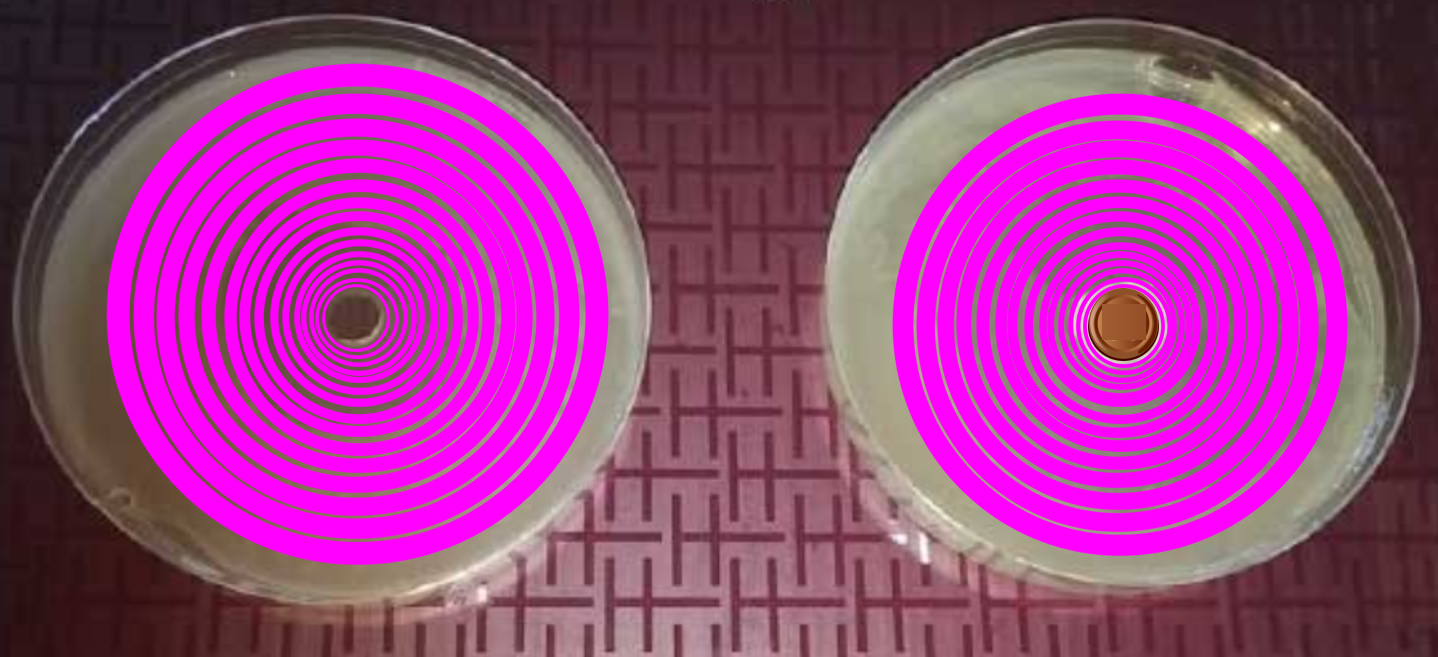
The Tables 1 and 2; Figures 1 and 2 are concerned with results pertaining present attempt on the analysis of BSF-Cream for antiaging influence. The skin-cream derived from the prepupal instars of larval stages of the insect, black soldier fly (BSF) in present research work appeared smooth in texture. BSF-Cream was light brown, pleasant and greasy with reference to physical appearance, odour and after-feel respectively. The tactile sensitivity allows human body to get the feeling of skin-cream. The most significant aspect of human body is the tactile sense. Diffusion abilities of cream is nothing but, the tendency of penetrations (or ability of penetration) of skin-cream (or fluids used for skin health) into the contiguous-fluids through the voyaging movements of the molecules in their contents. The diffusion ability of is concerned with measurement of quantities of the skin-cream diffused from the skin surface. The length (unit: centimeter) of journey of the skin-cream diffused from skin surface at the time interval of 5 minutes, 10 minutes, 15 minutes, 20 minutes, 25 minutes, 30 minutes after the application of the skin-cream was found reported 00.722 (±0.057); 00.893 (±0.065); 01.368 (±0.059); 01.955 (±0.786); 02.898 (±0.843); 03.848 (±0.964) respectively. Present attempt is reporting significant rate of diffusion for BSF-Cream in human skin.
Table 1. Decline in intensity of stained patches with applications of the BSF-cream.
|
Day |
Untreated Control Group. |
BSF-Cream Treated Group. |
Standard (Known) Cream Treated Group. |
|
05 |
99.252 (±8.679) |
82.684 (±7.716) |
74.724 (±7.654) |
|
10 |
97.376 (±8.329) |
67.191 (±6.495) |
43.364 (±9.517) |
|
15 |
87.571 (±8.073) |
41.096 (±8.648) |
19.264 (±5.786) |
|
20 |
64.741 (±6.469) |
15.789 (±3.774) |
12.189 (±4.693) |
|
25 |
42.582 (±7.786) |
03.456 (±0.786) |
00.741 (±0.054) |
|
30 |
39.712 (±7.684) |
- |
- |
|
35 |
32.769 (±7.769) |
- |
- |
|
40 |
30.263 (±6.485) |
- |
- |
|
45 |
26.738 (±6.467) |
- |
- |
|
50 |
19.536 (±5.758) |
- |
- |
|
55 |
12.513 (±3.936) |
- |
- |
|
60 |
10.418 (±1.786) |
- |
- |
- Each figure is the mean of the three replications.
-Figure with ± sign in the bracket is standard deviation.
-Figure below the standard deviation is the increase for calculated parameter and percent increase for the others over the control. *: P < 0.05; **: P < 0.005; ***: P < 0.01
Table 2. The diffusion ability of BSF-Cream.
|
Serial No. |
Duration (minutes) |
Diffusion Unit |
Water Number |
|
1 |
05 |
00.722 (±0.057) |
01 |
|
2 |
10 |
00.893 (±0.065) |
02 |
|
3 |
15 |
01.368 (±0.059) |
03 |
|
4 |
20 |
01.955 (±0.786) |
04 |
|
5 |
25 |
02.898 (±0.843) |
05 |
|
6 |
30 |
03.844 (±0.964) |
06 |
- Each figure is the mean of the three replications.
-Figure with ± sign in the bracket is standard deviation.
-Figure below the standard deviation is the increase for calculated parameter and percent increase for the others over the control. *: P < 0.05; **: P < 0.005; ***: P < 0.01
|
|
|
Figure 1. Diffusion of the “Black Soldier Fly Meal (BSFM) Cream” through nutrient agar medium. |
|
|
|
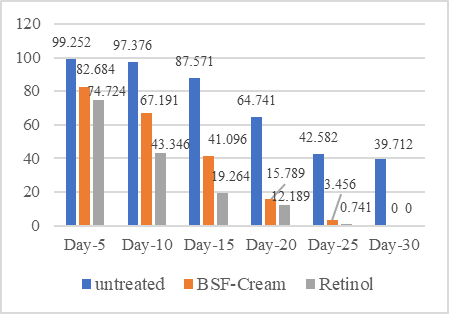
Figure 2. Percentage of Intensity to Decline in fluorescence of the “Dansyl-chloride” (5-Dimethyl-Amino-Naphthalene-1-Sulfonyl-chloride) stained patches with the application of the cream prepared through the use of the Black Soldier Fly Meal (BSFM) for the Activity of the Skin Renewal. |
The percent decline in the intensity of fluorescence for control group, BSF-Cream treated group and group treated with retinol cream on the fifth day after application was 99.252 (±8.679), 82.684 (±7.716) and 74.724 (±7.654) respectively. The percent decline in the intensity of fluorescence for control group, BSF-Cream treated group and group treated with retinol cream on the tenth day after application was 97.376 (±8.329), 67.191 (±6.495) and 43.364 (±9.517) respectively. The percent decline in the intensity of fluorescence for control group, BSF-Cream treated group and group treated with retinol cream on the fifteenth day after application was 87.571 (±8.073), 41.096 (±8.648) and 19.264 (±5.786) respectively. The percent decline in the intensity of fluorescence for control group, BSF-Cream treated group and group treated with retinol cream on the twentieth day after application was 64.741 (±6.469), 15.789 (±3.774) and 12.189 (±4.693) respectively. The percent decline in the intensity of fluorescence for control group, BSF-Cream treated group and group treated with retinol cream on the twenty-fifth day after application was 42.582 (±7.786), 03.456 (±0.786) and 00.741 (±0.054) respectively. The percent decline in the intensity of fluorescence for control group, BSF-Cream treated group and group treated with retinol cream on the thirtieth day after application was 39.712 (±7.684), 00.000 and 00.000 respectively. The percent decline in the intensity of fluorescence for control group, BSF-Cream treated group and group treated with retinol cream on the thirty-fifth day after application was 32.769 (±7.769), 00.000 and 00.000 respectively. The percent decline in the intensity of fluorescence for control group, BSF-Cream treated group and group treated with retinol cream on the fortieth day after application was 30.263 (±6.485), 00.000 and 00.000 respectively. The percent decline in the intensity of fluorescence for control group, BSF-Cream treated group and group treated with retinol cream on the forty-fifth day after application was 26.738 (±6.467), 00.000 and 00.000 respectively. The percent decline in the intensity of fluorescence for control group, BSF-Cream treated group and group treated with retinol cream on the fiftieth day after application was 19.536 (±5.758), 00.000 and 00.000 respectively. The percent decline in the intensity of fluorescence for control group, BSF-Cream treated group and group treated with retinol cream on the fifty-fifth day after application was 12.513 (±3.936), 00.000 and 00.000 respectively. The percent decline in the intensity of fluorescence for control group, BSF-Cream treated group and group treated with retinol cream on the sixtieth day after application was 10.418 (±1.786), 00.000 and 00.000 respectively. The statistical analysis through the use of “t-test”, the results reveal significant influence (P<0.05).
In comparison with the control, the BSF-Cream treatment was found significant reduction in time of skin-renewal. The anticipated increase in duration for skin-renewal through the treatments with the chemical agents like hypo-mitotic chemical compounds and reduction with the hyper-mitotic agents has been reported in present attempt through daily treatments. Further, this onset reported two weeks before staining and continued after staining. According to Ridge et al. (1988), it is not attainable when treatments started after staining. In accordant to demonstrate change in activities of mitotic-division for the cell-renewal, it is prime concern for pre-treatment to the skin with the BSF-Cream for the establishments with reference to full equilibrium at the affected (or changed) state of mitotic division before labelling with the stain (dansyl chloride). Successive claims for the influence on the cell-renewal through the applications with the constituents of the skin-cream should only be realisable through comparisons with the sites of treatments (Ridge et al., 1988). Approximately twenty days of duration is requirements for the skin-layer of stratum-corneum of the young and adults, the time of transit. The skin-layer of stratum-corneum in the older-adult individuals, this duration of transit time is lengthened by more than ten days. As age increase, there is no change in the number of horny layers of the skin-organ. The increase in duration of transit time duration for stratum-corneum, the results of present research work appear to be the reflections of diminished proliferations of epidermal cells. There is no decline in the renewal of the epidermal-cells with a constant rate throughout the adult phase of life. In younger phase of life, “decline renewal of the epidermal-cells” is remaining relatively constant. According to Grove and Kligman, (1983), the “decline renewal of the epidermal-cells” begins to drop significantly after the age of fifty. Fruitful claim for the influence of the BSF-Cream on renewal of the cells should made if and only if the results are used for comparison with the site of treatment with standard (or known) antiaging skin-cream. Both (BSF-Cream and standard-cream) should be allowed to equilibrate. The present research work is reporting significant antiaging influence on human skin.
BSF-Cream deserves significant antiaging efficiencies. This cream is going to show beyond doubt to be an excellent BSF-Product for antiaging therapy. BSF-Cream can be utilized for preventing the aging symptoms. The aging process is natural and unavoidable. The healthy BSF-Cream for skin slow down the natural aging process. Further attempts of studies may help to finalize the age of application of BSF-Cream by qualitative skin health.
Acknowledgments: The research work received academic support from the administrative staff of Agricultural Development Trust Baramati Shardanagar, (Malegaon Colony, Post Box No. – 35, Tal. Baramati; Dist. Pune – 413115 Maharashtra, India). Authors are thankful to International Science Community Association and ICAR-National Institute of Abiotic Stress Management (Malegaon-Karhavagaj Road, Khurd, Baramati, Taluka: Baramati, District: Pune Maharashtra State- 413115 India) for provision of laboratory. Authors are thankful to the editorial team of Entomology and Applied Science Letters (Cyber City, DLF Phase 2, Gurgaon-122002 Harayana, India) for expertise and assistance throughout all aspects of publication.
Conflict of interest: None
Financial support: None
Ethics statement: None
Adarkar, B. P. (1945). Report on labour conditions in the shellac industry.
Alander, J. (2007). “Cosmetics” in vegetable oils and fats (Aarhuskarlshamn, Karlshamn, Sweden), 214-234.
Alibardi, L. (2003). Adaptation to the land: The skin of reptiles in comparison to that of amphibians and endotherm amniotes. Journal of Experimental Zoology Part B: Molecular and Developmental Evolution, 298(1), 12-41. doi:10.1002/jez.b.24. https://en.wikipedia.org/wiki/Skin
Artelt, J., & Schneider, D. (2002). Investigation on the energy value of glycerol in the feeding of poultry and pigs. Union for Promotion of Oilseed-Schriften, (17), 15-36.
Avila Rodríguez, M. I., Rodríguez Barroso, L. G., & Sánchez, M. L. (2018). Collagen: A review on its sources and potential cosmetic applications. Journal of Cosmetic Dermatology, 17(1), 20-26. doi:10.1111/jocd.12450
Baboo, B., & Goswammi, D. N. (2010). Processing, chemistry and applications of lac. New Delhi: ICAR.
Baily, N. T. J. (1955). Statistical methods in biology. London: Hodder and Stoughton. https://archive.org/details/statisticalmetho0000bail_d8l1
Cahan, E. (2020). COVID-19 hits US mink farms after ripping through Europe. Science, 80(10.1126).
Čičková, H., Newton, G. L., Lacy, R. C., & Kozánek, M. (2015). The use of fly larvae for organic waste treatment. Waste Management, 35, 68-80.
da Silva, G. D. P., & Hesselberg, T. (2020). A review of the use of black soldier fly larvae, Hermetia illucens (Diptera: Stratiomyidae), to compost organic waste in tropical regions. Neotropical Entomology, 49(2), 151-162. doi:10.1007/s13744-019-00719-z
Dutton, L. M. (2021). "Appendix III: Cochineal Recipes" (PDF). Cochineal: A Bright Red Animal Dye [Master's-Thesis]. Baylor University. Available from: https://en.wikipedia.org/wiki/Cochineal
Fayle, T. M., Turner, E. C., Snaddon, J. L., Chey, V. K., Chung, A. Y., Eggleton, P., & Foster, W. A. (2010). Oil palm expansion into rain forest greatly reduces ant biodiversity in canopy, epiphytes and leaf-litter. Basic and Applied Ecology, 11(4), 337-345.
Grove, G. L., & Kligman, A. M. (1983). Age-associated changes in human epidermal cell renewal. Journal of Gerontology, 38(2), 137-142. doi:10.1093/geronj/38.2.137
Iacovidou, E., Hahladakis, J. N., & Purnell, P. (2021). A systems thinking approach to understanding the challenges of achieving the circular economy. Environmental Science and Pollution Research, 28(19), 24785-24806. doi:10.1007/s11356-020-11725-9
Jansen, L. H., Hojyo‐Tomoko, M. T., & Kligman, A. M. (1974). Improved fluorescence staining technique for estimating turnover of the human stratum corneum. British Journal of Dermatology, 90(1), 9-12.
Khyade, V. B. (2021). Influence of methanolic extractives of prepupal stages of black soldier, hermetia illucens L. (Diptera: Stratiomyidae) on the biochemical parameters of serum and liver in the dmba induced toxicity in Norwegian rat, rattus norvegicus (L). Journal of Modern Chemistry and Chemical Technology, 12(3).
Khyade, V. B. (2023). Cream derived from the black soldier fly meal (BSFM) for the functional parameters of human skin. PriMera Scientific Dental Sciences, 1(1), 15-26.
Khyade, V. B., & Eigen, M. (2018). Key role of statistics for the fortification of concepts in agricultural studies. International Academic Journal of Innovative Research, 5(3), 32-46. www.iaiest.com
Khyade, V. B., & Tamhane, A. B. (2021). Controlling the influence of biochemical changes induced by DMBA through the methanolic maceratives of pre-pupal stages of black soldier fly, Hermetia illucens (L.) (MMPPSBSF) in rats. Biomedical Journal of Scientific & Technical Research, 40(1), 31866-31875.
Khyade, V. B., & Tamhane, A. B. (2021). Treating the rats suffering from carcinogen induced toxicity with preparations from prepupal stages of black soldier fly (BSF). International Journal of Chemical and Molecular Engineering, 7(2), 15-27. http://chemical.journalspub.info/index.php?journal=JCME&page=index
Khyade, V. B., & Tamhane, A. B. (2021). Utilization of the methanol maceratives of pre-pupal stages of the black soldier fly, Hermetia illucens L. (Diptera: stratiomyidae) for inhibition of bacterial growth. Uttar Pradesh Journal of Zoology, 42(14), 109-118.
Kirchherr, J., Reike, D., & Hekkert, M. (2017). Conceptualizing the circular economy: An analysis of 114 definitions. Resources, Conservation and Recycling, 127, 221-232. doi:10.1016/j.resconrec.2017.09.005
Kligman, A. M., & Christophers, E. (1963). Preparation of isolated sheets of human stratum corneum. Archives of Dermatology, 88(6), 702-705.
Le Poole, H. A. C. (1994). Natural oils and fats: Multifunctional ingredients for skin care. Dekker.
Li, Q., Zheng, L., Hou, Y., Yang, S., & Yu, Z. (2011). Insect fat, a promising resource for biodiesel. Journal of Petroleum & Environmental Biotechnology, 2(1), 2-4. doi:10.4172/2157-7463.S2-001
Liu, C., Wang, C., & Yao, H. (2019). Comprehensive resource utilization of waste using the black soldier fly (Hermetia illucens (L.))(Diptera: Stratiomyidae). Animals, 9(6), 349. doi:10.3390/ani9060349
McLoone, P., Oluwadun, A., Warnock, M., & Fyfe, L. (2016). Honey: A therapeutic agent for disorders of the skin. Central Asian Journal of Global Health, 5(1), 241. doi:10.5195/cajgh.2016.241
Muazu, J., Lame, S., Mohammed, G. T., & Madu, S. J. (2015). Formulation and tableting properties of aqueous extract of fresh ginger (Zingiber officinale) rhizome. World Journal of Pharmaceutical Research, 4(9), 9-18.
Pappas, A. (2009). Epidermal surface lipids. Dermato-Endocrinology, 1(2), 72-76. doi:10.4161/derm.1.2.7811
Pattanayak, S., Nayak, S. S., Dinda, S. C., Panda, D., & Navale, K. P. (2011). Evaluation of herbal ointments formulated with methanolic extract of Cajanus scarabaeoides. Journal of Pharmacy and Allied Health Sciences, 1(2), 49-57.
Prashanth, K. H., & Tharanathan, R. N. (2007). Chitin/chitosan: Modifications and their unlimited application potential—An overview. Trends in Food Science & Technology, 18(3), 117-131.
Ridge, B. D., Batt, M. D., Palmer, H. E., & Jarrett, A. (1988). The dansyl chloride technique for stratum corneum renewal as an indicator of changes in epidermal mitotic activity following topical treatment. British Journal of Dermatology, 118(2), 167-174. doi:10.1111/j.1365-2133
Senior, M. J., Hamer, K. C., Bottrell, S., Edwards, D. P., Fayle, T. M., Lucey, J. M., Mayhew, P. J., Newton, R., Peh, K. S. H., Sheldon, F. H., et al. (2013). Trait-dependent declines of species following conversion of tropical forest to oil palm plantations. Biodiversity and Conservation, 22, 253-268.
Shanazi, M., Khalili, A. F., Kamalifard, M., Jafarabadi, M. A., Masoudin, K., & Esmaeli, F. (2015). Comparison of the effects of lanolin, peppermint, and dexpanthenol creams on treatment of traumatic nipples in breastfeeding mothers. Journal of Caring Sciences, 4(4), 297-307. doi:10.15171/jcs.2015.030
Shortall, O. K., Raman, S., & Millar, K. (2015). Are plants the new oil? Responsible innovation, biorefining and multipurpose agriculture. Energy Policy, 86, 360-368.
Stamatas, G. N., de Sterke, J., Hauser, M., von Stetten, O., & van der Pol, A. (2008). Lipid uptake and skin occlusion following topical application of oils on adult and infant skin. Journal of Dermatological Science, 50(2), 135-142.
Teixeira Filho, N. P. (2018). Devoradores de lixo: aspectos biológicos, produtivos e nutricionais da mosca soldado Hermetia illucens (L., 1758)(Díptera; Stratiomyidae) em resíduos sólidos orgânicos em Manaus, AM [Master’s Thesis], Universidade Federal do Amazonas, Manaus, Brazil.
Van Huis, A. (2013). Potential of insects as food and feed in assuring food security. Annual Review of Entomology, 58, 563-583.
Wagner, H. J., Douglas, R. H., Frank, T. M., Roberts, N. W., & Partridge, J. C. (2009). A novel vertebrate eye using both refractive and reflective optics. Current Biology, 19(2), 108-114. doi:10.1016/j.cub.2008.11.061
Zheng, L., Li, Q., Zhang, J., & Yu, Z. (2012). Double the biodiesel yield: Rearing black soldier fly larvae, Hermetia illucens, on solid residual fraction of restaurant waste after grease extraction for biodiesel production. Renewable Energy, 41, 75-79.